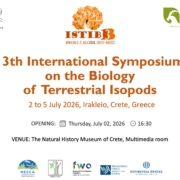
The “13th International Symposium on the Biology of Terrestrial Isopods” in Crete, Greece

The Hellenic Institute of Speleological Research (HISR) and the Natural History Museum of Crete (NHMC) of the University of Crete, invite you to the 13th International Symposium on the Biology of Terrestrial Isopods (ISTIB13) to be held at the premises of the NHMC, in Irakleion city, Crete, Greece, from 2 to 5 July 2026, celebrating the return of ISTIB to Crete after 25 […]

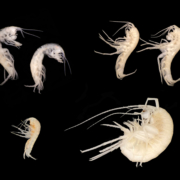
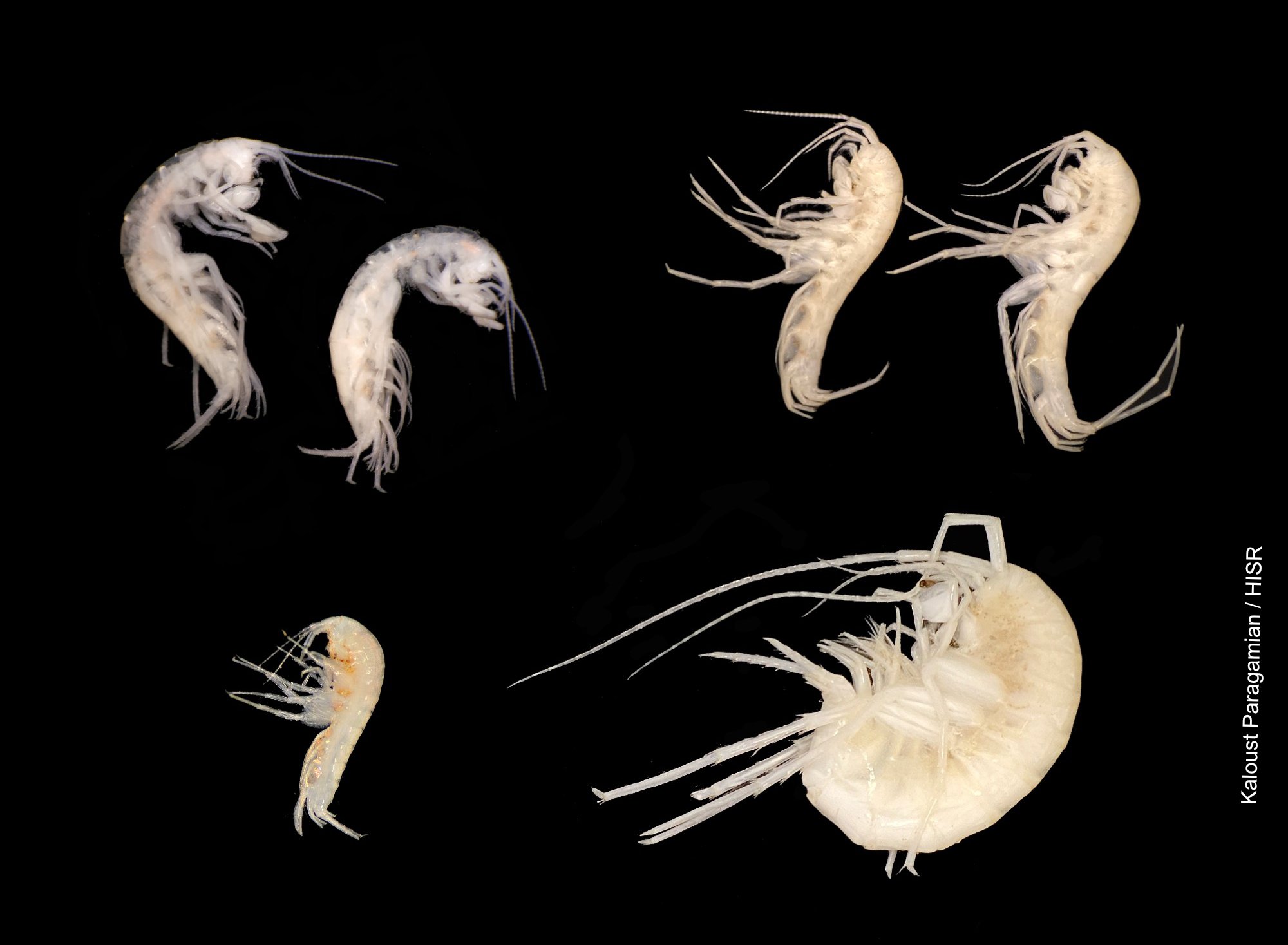
Greece’s Cave Animal of the Year 2026 is the niphargid amphipods!

The Hellenic Institute of Speleological Research and the Hellenic Speleological Federation have nominated the animals of the Niphargidae family as Cave Animal of the Year 2026 for Greece, participating in the wellknown Global Campaign and contributing to informing and raising awareness among citizens about the unique forms of life in the underground ecosystems of our country.

The family Niphargidae was established in 1977, based on the genus Niphargus, which originated from the ancient Greek word Niphargis (Νιφαργής), meaning “snow-white.” This family of amphipod crustaceans (small crustaceans) includes at least 440 species that usually live in groundwater (aquifers, caves, springs, wells, hyporheic rivers’ zone, etc.) of Western EurasiaThese species are completely blind (anophthalmous); their bodies are colourless or white, often translucent, and they have elongated antennae and appendages to orient themselves and detect food through touch and chemosensitivity.

In Greece, 23 species have been described to date, of which 21 are endemic. There are still at least 4 new species that are expected to be described soon.
International Bat Appreciation Day

International Bat Appreciation Day, celebrated annually on April 17th, serves as a reminder of the significant role that bats play in nature. April is the best time of the year to observe bats. As they have emerged from hibernation (or elongated torpor), they are starving and are very active in foraging for insects.

Given the frequent unpopularity and misunderstanding of bats among people, it is worth exploring some intriguing facts about these creatures.

Fallacies:

  • Bats do not get tangled in hair. In fact, they are avoiding humans.
  • They are not associated with significant dispersal of pathogens to humans.
  • They are not winged rodents J. They’re more closely related to humans than they are to mice or rats.
  • They are not blind.

Facts:

  • They fly using their…hands, making them the only mammals capable of true powered flight.
  • There are over 1,400 bat species worldwide, comprising 20% of all mammals.
  • The longevity of some species exceeds the 40 years.
  • They can see! Many of them can see just as well as humans.
  • Insectivorous bats can consume up to 60% of their body weight in food per night!
  • They use echolocation to perceive their surroundings. This allows the bats to commute in the dark while also locating their prey and estimating their speed.
  • A bat’s heart rate during flight can reach 1,000 beats per minute!
  • The world’s smallest bat weights 2-4 grams!
  • Bats have very few natural predators. Humans and their activities pose the most serious threats to them.
  • Temperate bats typically give birth to a single pup per year. They mate in the autumn; however, the fertilization occurs in spring.
  • Bats are very social animals. They often form aggregations that can reach tens of thousands of individuals!
  • Greece is home to 37 out of the 55 bat species found in Europe.
  • All bat species are strictly protected under the Union and National legal framework.

Cave Animal of the Year 2024

The initiative “GREECE – Cave Animal of the Year” is a contribution to the effort to inform and raise public awareness about the amazing creatures of our country’s underground environment. Greece started this effort in 2021 -the International Year of Caves and Karst- to join the international awareness efforts initiated by Germany and expanded with the participation of other countries.

See more for the “Cave Animal of the Year” here

Detailed information on all cavernicolous animal species in Greece can be found in the Cave Fauna of Greece Database: https://database.inspee.gr/